
REVIEW · GRANADA CANYONING & ROCK CLIMBING TRIPS
From Granada: 3-Hour Vía Ferrata in Moclín
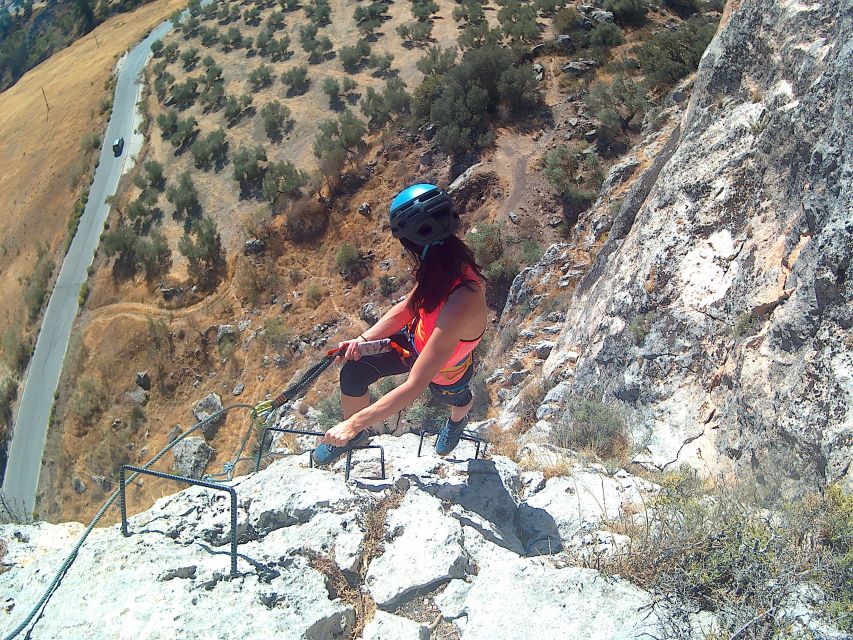
You climb a steel-lined wall. This is a guided via ferrata that mixes classic obstacles, a 60 meter ascent, and the fun factor of a zip line, all without needing prior experience. I love that it is beginner-friendly but still has real moments of nerves, and I love the extra care from guides like Pedro and Harry who slow things down when you need confidence. One possible drawback is that you must be able to climb and descend stairs, and the route is not for everyone if you have certain pain issues or limited mobility.
Expect a full loop in about three hours, starting with gear up and ending back in Granada at Neptuno mall. Along the way you will use iron footholds and chains, cross suspended features like a Tibetan Bridge and monkey pass, and finish with rappelling down a rocky cliffside. You also get a digital photo album, plus tea or coffee with muffins and snacks, which makes it feel like more than just a quick workout.
Key points to know before you go
- Small group (up to 10) means you get hands-on attention on the wall
- Low-medium initiation style with vertical sections and steps that test bravery
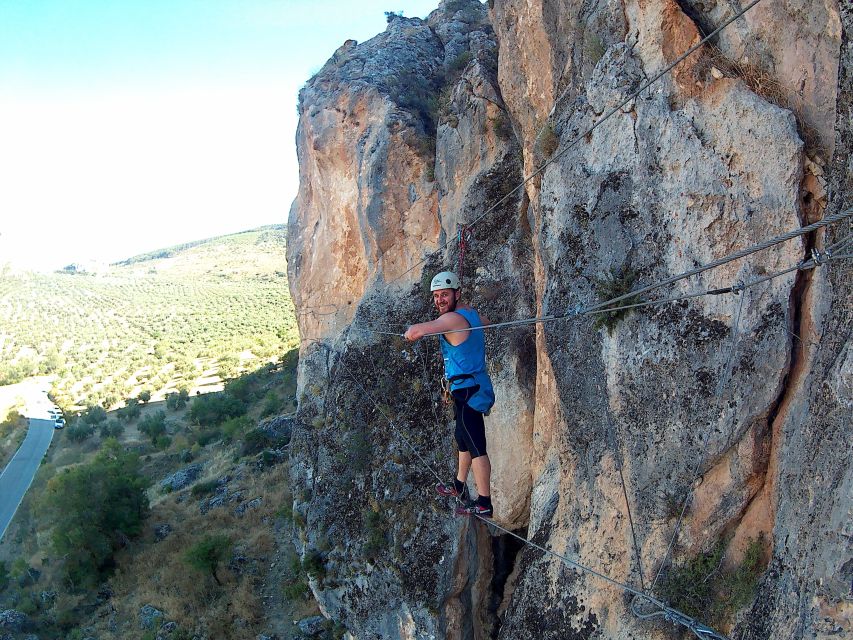
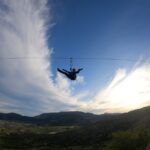
- Signature mix of obstacles including Tibetan Bridge, monkey pass, a tricky crossing, and a zip line
- Guided safety and full equipment with helmet, harness, and via ferrata dissipation system
- Photo album plus snack break so you leave with memories and fuel
- 3 hours total with round-trip coach from central Granada
More rope work in the hills behind the city
- Granada: Los Cahorros de Monachil Canyon Hiking Tour★ 4.9 · 879 reviews
- Hiking in the Canyon of the Monachil Cubs in Granada★ 5.0 · 407 reviews
- Climbing the John Hogbin Via Ferrata with Lunch★ 5.0 · 94 reviews
- From Granada: Rio Verde Canyoning Tour with Lunch★ 5.0 · 77 reviews
Why the Moclín Ferrata Feels Like a Best-Of Starter Course
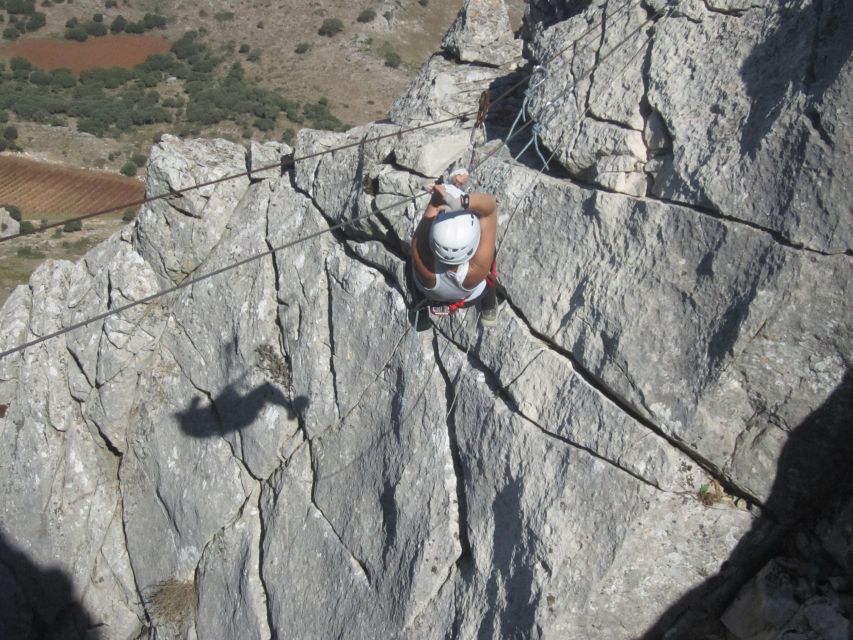
This is one of those routes that teaches you the basics fast, without feeling watered down. The wall is vertical in places, you will climb using fixed iron steps and chains, and you will learn how to trust the system while still getting that real outdoors feeling.
What makes it especially good for first-timers is the way it strings together different challenges. Instead of just one long grind upward, you get a sequence of moments, like the suspended Tibetan Bridge and the monkey pass. That means you stay mentally engaged, and you also get more than one kind of confidence boost.
I also like that the route is described as low-medium difficulty. That usually means you will be challenged, but you are not being thrown into the deep end of advanced exposure. You should still expect to work with your hands and feet, and you will definitely feel the height when you hit the emptier sections.
If you do not like heights, this might still be okay, as long as you go in with the right mindset. The chains and pacing from a patient guide help. Still, the “emptiness” factor is part of the experience, so consider that before you book.
Granada Pickup, Air-Conditioned Coach, and Getting to the Right Place
Your day starts in Granada city center at Neptuno mall. You meet there, then hop into an air-conditioned coach for the ride to Moclín. The group stays small, and the whole setup is built for comfort because you are not driving yourself on narrow roads.
The transport is round trip, and your tour ends back at the meeting point. That matters more than it sounds, because getting to outdoor adventure spots in Andalusia can be awkward if you are not renting a car.
The ride itself is a nice warm-up. You get out of Granada, look at the valley area from a distance, and start mentally switching from city mode to mountain mode. Even if you are not thinking about climbing yet, you are already arriving with the scenery in view, which makes the later “wow” moments hit harder.
Gear Up and Learn the Ferrata Rhythm on the 60 Meter Wall
Once you reach the bottom, you gear up and begin the ascent with an expert guide. You get the full safety kit: a helmet, harness, and the via ferrata dissipation device, along with anchoring slings and other required gear. That is a key value point. You are not improvising, and you are not guessing how the system should feel.
No previous experience is needed, and you do not need to be in really good physical condition. Still, you should treat this as active time. You will climb a 60 meter wall, and your legs and core will work, especially on vertical sections.
A good guide is everything on a first ferrata. In the experience, guides like Pedro and Harry are specifically noted for being attentive, kind, and patient. That usually translates into real help on body position, where to place your feet, and how to manage the moment when you feel your courage drop.
One practical point for you: even if you are comfortable with climbing in general, you must be able to climb and descend stairs. If stairs feel hard for your knees, calves, or hips, it can change your experience. This is not about being an athlete, it is about being physically steady enough for the transitions.
The Obstacle Sequence: Tibetan Bridge, Monkey Pass, and a Tricky Crossing
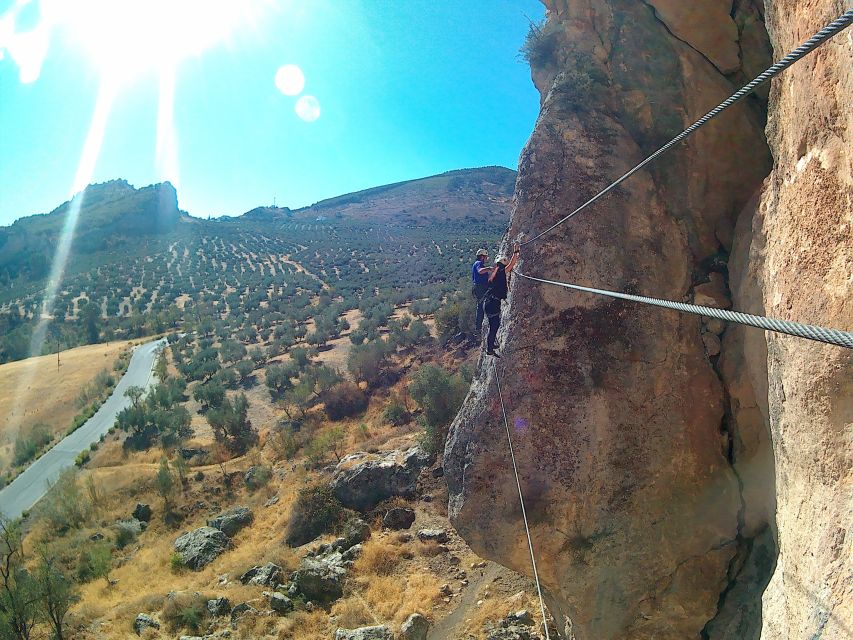
This via ferrata is built like a highlight reel. You will overcome multiple features, and each one trains a different skill.
Other Granada mornings that run about three hours
Tibetan Bridge
This is the suspended section that gives you that classic “I am looking at air” feeling. On a route like this, the guide help is not just safety. It is also mental pacing, helping you cross without rushing.
What you will feel most is balance and commitment. The best move is calm feet, controlled arm position, and a steady gaze. If you look down the whole time, you can get more nervous than you need to be.
Monkey pass
This part is designed to make you use your grip and technique in a more playful way. It is not just about leg power. You will likely need to adjust your stance and hand placement until it feels right.
Slightly collapsed crossing
This is one of the more “pay attention” moments. Because the crossing is described as slightly collapsed, you should expect careful footwork and close guidance. This is where your guide’s patience matters, because you want clear instructions before you step.
Even if you are not sure what to expect, you can use the chain system as your anchor points. The important thing is to move deliberately rather than testing your nerves.
Zip line
Then you hit the zip line, which is a great contrast. You go from slow and controlled to fast and flowing. For many first-timers, this is the reward moment, the part you will talk about on the way back.
The zip line can also make you feel extra brave after the harder crossings. It is a smart way to end a ferrata sequence with a win.
Rappelling Down: When the Chain Becomes Your Safety Buddy
After the upward and obstacle parts, you will try rappelling down the rocky cliffside. You let the chain be your safety guide down to the bottom.
Rappelling sounds intimidating, but on a guided route with the right equipment, it becomes a controlled descent. The key is that you are not just jumping down and hoping for the best. You follow the system, manage your position, and move at a pace your guide supports.
For me, this portion is where the experience turns from “climbing achievement” into “skills gained.” You learn a safe way to come down that you can feel good about afterward.
It is also why this route fits the initiation category. You do not only go up. You practice the full loop of climbing, crossing, and descending.
Views and Pacing: What Low-Medium Difficulty Means in Real Life
You will take in spectacular views of the valley as you climb. The route includes vertical sections and iron steps, so your speed is not the goal. The goal is steady progress and safe movement.
The low-medium label usually helps beginners because it suggests the challenges are real but manageable. You will still be asked to work through steps that test bravery. In plain terms, you might not feel confident the whole time, and that is normal.
A practical mindset for you: treat this like a guided problem-solving exercise. When your body freezes, listen, reset your feet, and follow the chain and foothold system. Your guide is there to make sure you understand how to move.
Also, keep an eye on your breathing. On exposed sections like the Tibetan Bridge, tension often shows up as short breaths. Slow breath helps your hands and legs behave better.
Digital Photo Album, Tea or Coffee, and Leaving With Real Memories
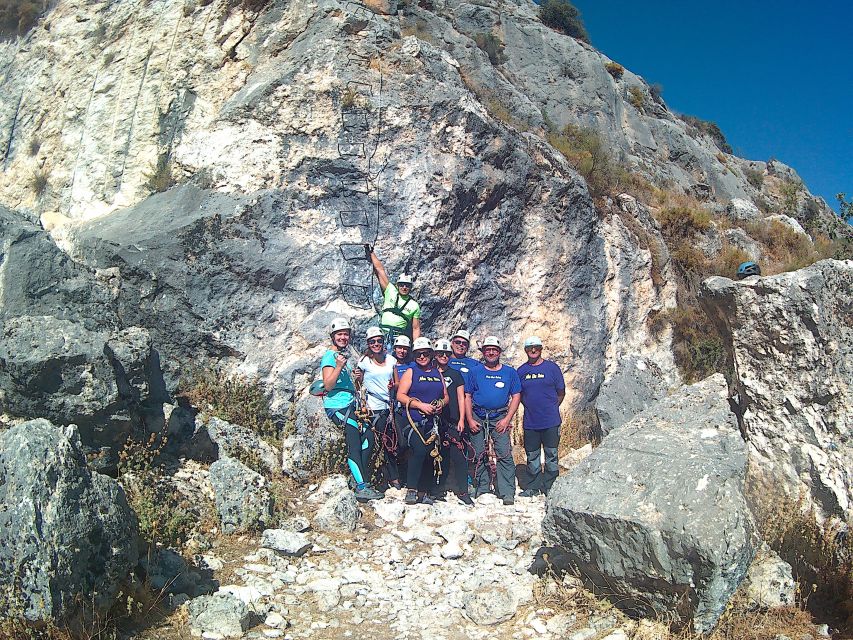
This tour includes a digital album of photos from your time on the wall. Getting images on an active day is always worth it, because you are busy climbing. You do not have to worry about juggling a camera, and you also get action shots that you might never capture yourself.
Afterward, you get a relaxing tea or coffee with muffins and snacks. This is a small detail, but it matters. It turns the experience into a complete outing rather than a quick burst of adrenaline and then back to normal life immediately.
You end the tour with hassle-free transportation back to Granada. For many people, that is the best way to enjoy a physical activity without stressing about logistics after you are tired.
Price and Value: What You Get for About $77
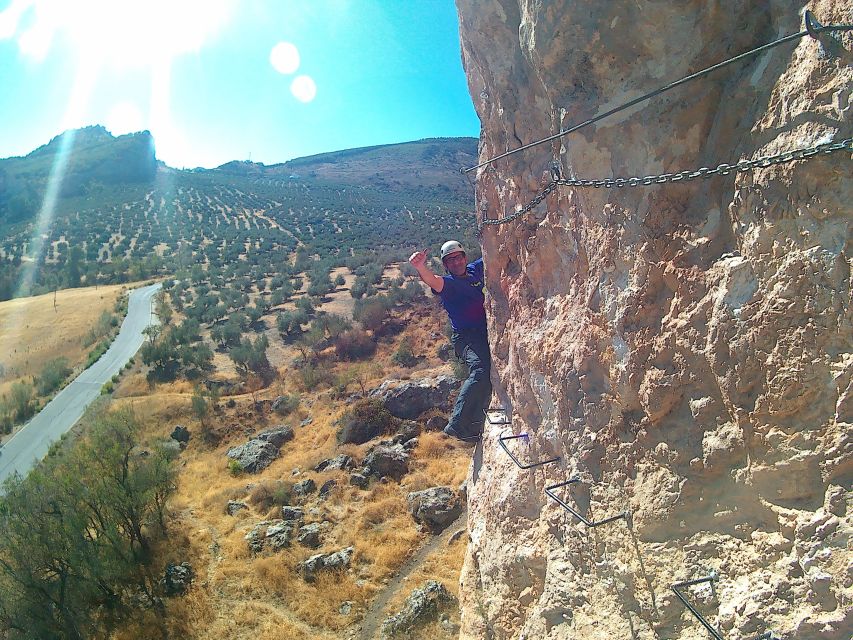
At $77 per person for roughly three hours, this price makes sense when you count what is included. You are getting:
- A guided climbing experience by an expert
- Helmet, harness, via ferrata dissipation device, anchoring slings, and other needed material
- Water, a snack, tea or coffee, and muffins
- A digital photo album
- Round-trip air-conditioned coach from central Granada, returning to the start
- Total insurance coverage
If you tried to do this on your own, the cost of equipment, insurance, and a real guide would likely add up fast. Plus, you would lose the learning piece, the safety confidence, and the smooth “just show up” flow.
The small group size also supports the value. Limited to 10 participants, you are more likely to get individualized attention instead of feeling rushed.
So yes, it is not a bargain-basement activity. But for a guided, insured, gear-provided outdoor adventure with photos and transport, it is good value.
Who This Moclín Via Ferrata Suits Best (and Who Should Skip It)
This is a smart choice if you want a first via ferrata that still feels adventurous. You do not need prior experience, and the difficulty is described as low-medium. If you can handle vertical climbing with help from iron footholds and chains, you will likely enjoy it.
It also fits people who want a guided experience because you get safety structure and reassurance from the start. The guide attention from Pedro and Harry is specifically praised, and that tends to show up as patience when people feel uncertain.
On the other hand, it is not for everyone. The tour is not permitted for people with limited mobility and it is unfortunately not suitable for pregnant women. You also need to carefully consider participation if you have back, neck, joint, or muscular problems.
And you should be honest with yourself about stairs. Even if you think you are fine with climbing, the day still involves moving on foot before and after the main wall.
Final Call: Should You Book This Granada-to-Moclín Ferrata?
I would book this if you are craving a real mountain adventure without needing previous climbing experience. The obstacle mix is a big reason. You get the Tibetan Bridge, monkey pass, a tricky crossing, and a zip line in one smooth guided outing. That makes it more memorable than doing the simplest version of a route.
It is also a strong pick if you value guidance and safety. Full gear, a knowledgeable guide, and total insurance coverage mean you can focus on learning the movement, not worrying about what comes next.
Skip it if you cannot comfortably climb and descend stairs, or if your body issues affect your ability to handle vertical climbing. And if you have a strong fear of heights, remember that the route includes emptier sections, even though the support system helps.
If you want an authentic Andalusian outdoor day that feels like more than a “one photo and done” activity, this via ferrata is a solid choice.
FAQ
How long is the via ferrata experience from Granada?
The experience lasts about 3 hours. You should check availability to see the specific starting times.
Where do I meet in Granada, and where do we end?
You start in Granada city center at Neptuno mall, and the activity ends back at the same meeting point.
What equipment is included?
You are provided with a helmet, harness, and a via ferrata dissipation device, along with anchoring slings and other material needed for the climb.
Do I need previous climbing experience?
No previous experience is needed. The route is designed as a low-medium initiation via ferrata.
Is it suitable for people with limited mobility or pregnant women?
No. People with limited mobility and pregnant women are not permitted on this tour.
Is there free cancellation?
Yes. You can cancel up to 24 hours in advance for a full refund.
Three-Hour Granada Mornings


More Tour Reviews in Granada


Rope Work Above Granada
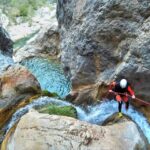
Just added from around Granada
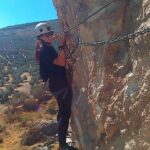

Granada Canyoning & Rock Climbing Trips, side by side.
 ★ 4.9Los Cahorros de Monachil Canyon Hiking TourFrom $54879 reviews
 ★ 5.0Hiking in the Canyon of the Monachil Cubs in GranadaFrom $55407 reviews
 ★ 5.0Climbing the John Hogbin Via Ferrata with LunchFrom $11494 reviews
 ★ 5.0Rio Verde Canyoning Tour with LunchFrom $11277 reviews
 ★ 4.5Rio Verde Canyoning TourFrom $10829 reviews
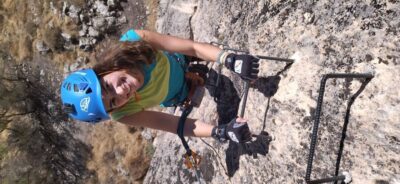 ★ 5.0Via Ferrata Moclín with TransfersFrom $11215 reviews
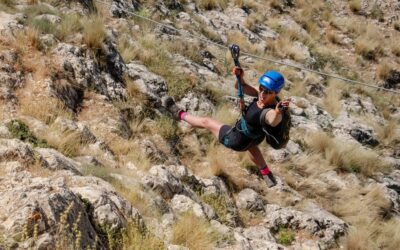 ★ 5.0Climb Zafarraya’s ‘Via Ferrata John Hogbin’From $1126 reviews
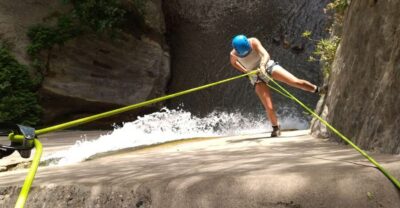 ★ 5.0Adventure Cahorros, Monachil/ Climbing and abseiling GranadaFrom $1125 reviews
Other Granada pages with this tour