
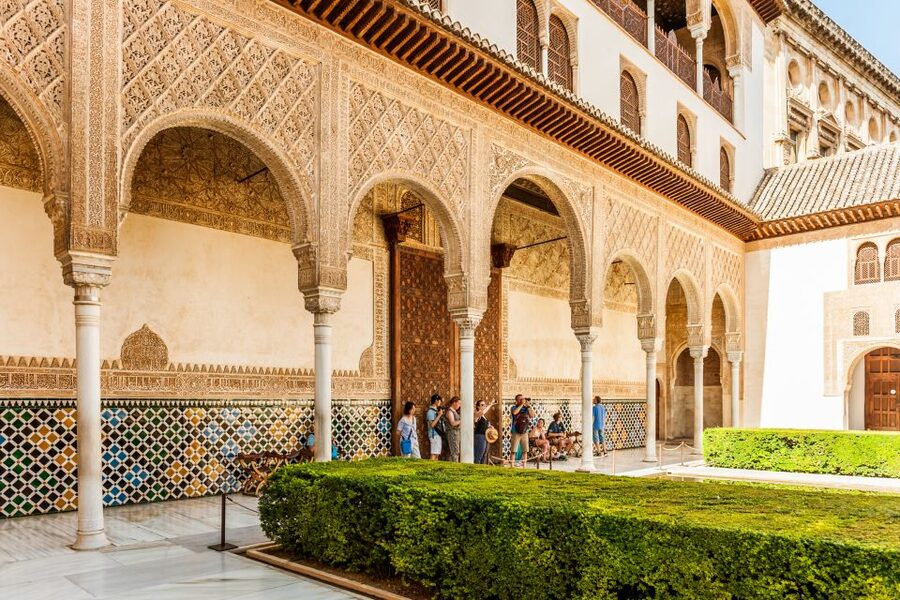
The hill sells out first.
Nasrid Palaces slots, zambra in the Sacromonte caves, sunset from San Nicolás and the free tapas that arrives with every glass: what each one costs and where to book it.
Alhambra first, then everything else.
The palace hill is the one thing in Granada you cannot improvise: Nasrid Palaces entry runs on a half-hour slot and goes weeks ahead. Sort that, then build around it with a cave show, a walk down the Carrera del Darro, and a morning up at the snowline.
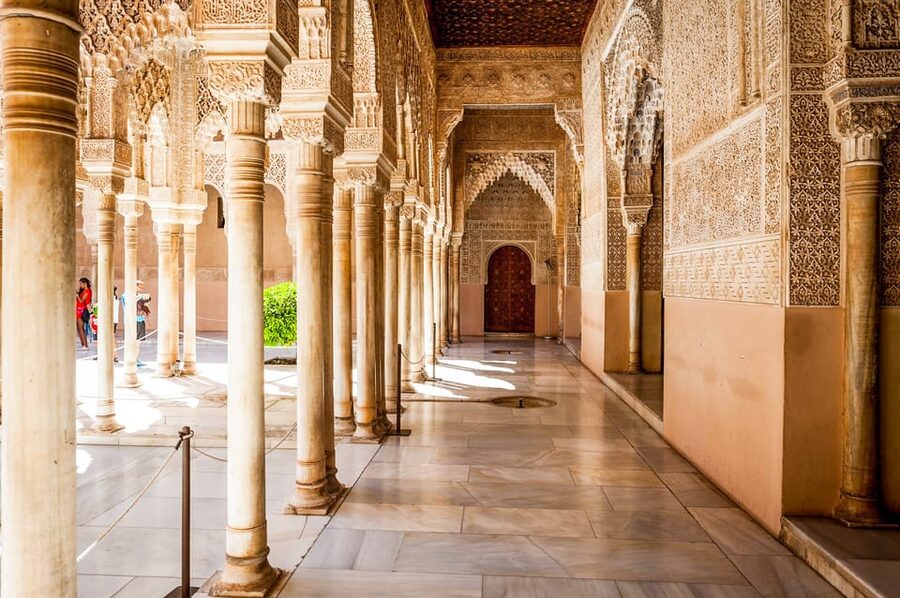
Alhambra and Nasrid Palaces Entry Ticket
Fast-track Alhambra access focused on the Nasrid Palaces, Generalife, and Alcazaba. Plan your slot, bring ID, and walk smart.
From $33 per person
Read the review → ★ 4.5Gone by springAlhambra & Gardens Tour w/Nasrid Palaces OptionFrom $236,437 reviews
 ★ 4.1A guide favouriteAlhambra Entry Ticket with Audio GuideFrom $665,950 reviews
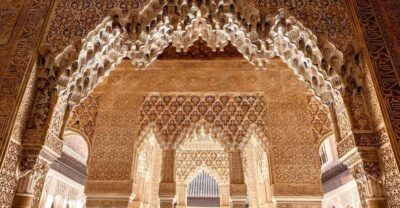 ★ 4.7Uphill, worth itFast-Track Alhambra & Nasrid Palaces Guided TourFrom $564,379 reviews
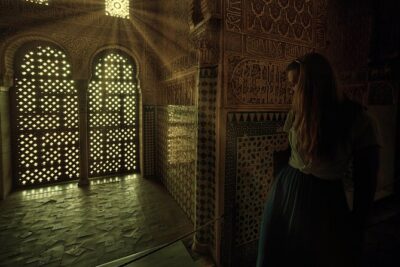 ★ 4.0Good first morningSkip The Line Alhambra and Generalife Guided TourFrom $353,825 reviews
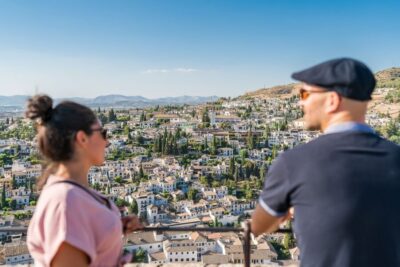 ★ 4.7Never a coach groupAlhambra Ticket and Guided Tour with Nasrid PalacesFrom $593,496 reviews
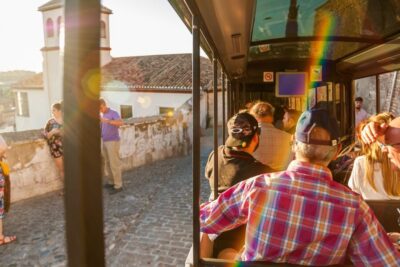 ★ 3.5Timed entryGranada City Train 1 or 2-Day Hop-On Hop-Off TicketFrom $83,128 reviews
One hill, eight hundred years.
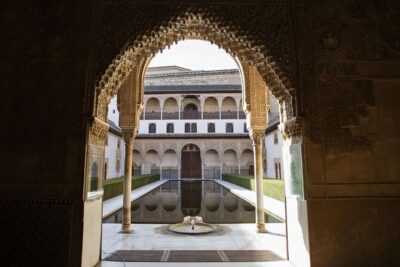
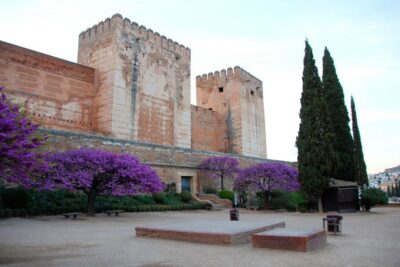
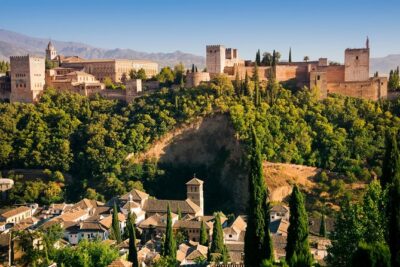
Alcazaba ramparts over the Vega, the Court of the Myrtles holding its reflection flat, then the Nasrid Palaces on a slot that will not wait for you. Give it a whole morning, take the Generalife on the way out, and come down through the Cuesta de los Chinos with the Darro running beside you.
Which Alhambra ticket do you need?
Three ways onto the hill, and they are not interchangeable. The Nasrid Palaces want a timed slot booked well ahead; the gardens do not. Pick the one that fits the day you have, and every option behind it is already priced.
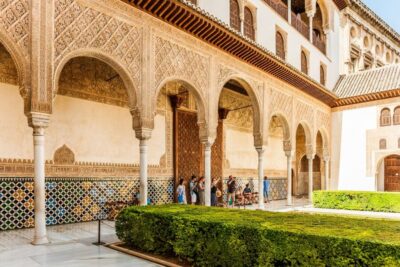 Timed entry
The full palaces
3 hours · from $64 · 19,801 reviews
The ticket with a half-hour window printed on it. Comares, the Court of the Lions, the honeycomb dome in the Hall of the Two Sisters. Miss the window and the door stays shut, so take the earliest slot going and be at the Puerta de la Justicia well before it.
See the timed-entry tours →
Timed entry
The full palaces
3 hours · from $64 · 19,801 reviews
The ticket with a half-hour window printed on it. Comares, the Court of the Lions, the honeycomb dome in the Hall of the Two Sisters. Miss the window and the door stays shut, so take the earliest slot going and be at the Puerta de la Justicia well before it.
See the timed-entry tours →
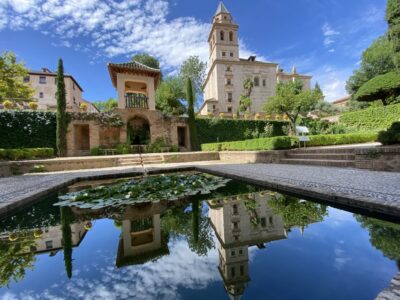 Gardens only
The water gardens
3 hours · from $88 · 8,313 reviews
Generalife, the Partal pools and the Alcazaba ramparts, without the palace slot. Cheaper, far easier to get hold of, and still the best view of the Albaicín in the city. This is the one to take when the Nasrid tickets have gone.
See the garden tickets →
With a guide
The guided run
3 hours (approx.) · from $35 · 3,825 reviews
Someone who knows which courtyard to reach before the coach groups, tickets already in hand at the gate, and the Arabic inscriptions read out rather than guessed at. It costs more than the ticket alone and buys back the queue and the wrong turns.
See the guided tours →
Gardens only
The water gardens
3 hours · from $88 · 8,313 reviews
Generalife, the Partal pools and the Alcazaba ramparts, without the palace slot. Cheaper, far easier to get hold of, and still the best view of the Albaicín in the city. This is the one to take when the Nasrid tickets have gone.
See the garden tickets →
With a guide
The guided run
3 hours (approx.) · from $35 · 3,825 reviews
Someone who knows which courtyard to reach before the coach groups, tickets already in hand at the gate, and the Arabic inscriptions read out rather than guessed at. It costs more than the ticket alone and buys back the queue and the wrong turns.
See the guided tours →
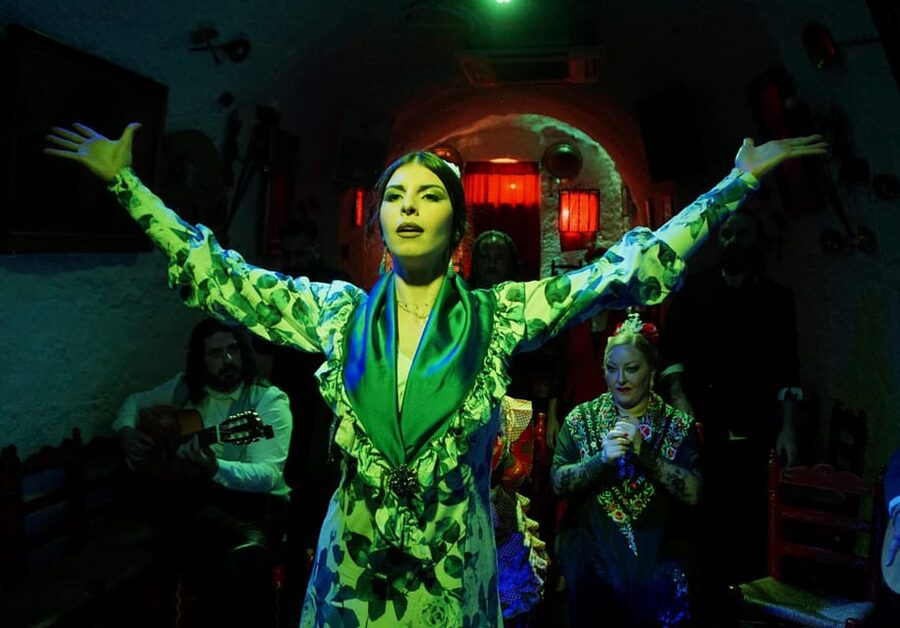
The night belongs to Sacromonte.
Zambra is the hill’s own flamenco, danced in whitewashed caves cut straight into the ridge, close enough that the boards move under your chair. Back down in the Albaicín the teterias stay open late, and every glass still arrives with something to eat beside it.
The Albaicín has no straight lines.
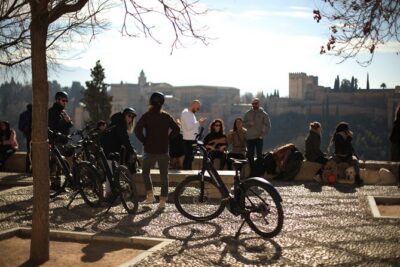
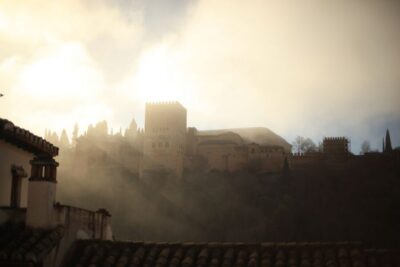
Cobbles laid before the maps existed, carmen gardens behind every studded door, and a climb to San Nicolás timed so the palace turns gold in front of you. Guides here earn the fee on the shortcuts alone.
Snow above, tapas below.
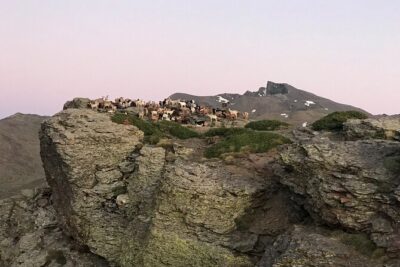
The highest road in Europe climbs out of the city to 2,500 metres, and the white villages of the Alpujarras hang off the far side of the ridge. Trevélez cures its ham at 1,400 metres because nowhere lower in Spain stays cold enough.
The city the monarchs kept.
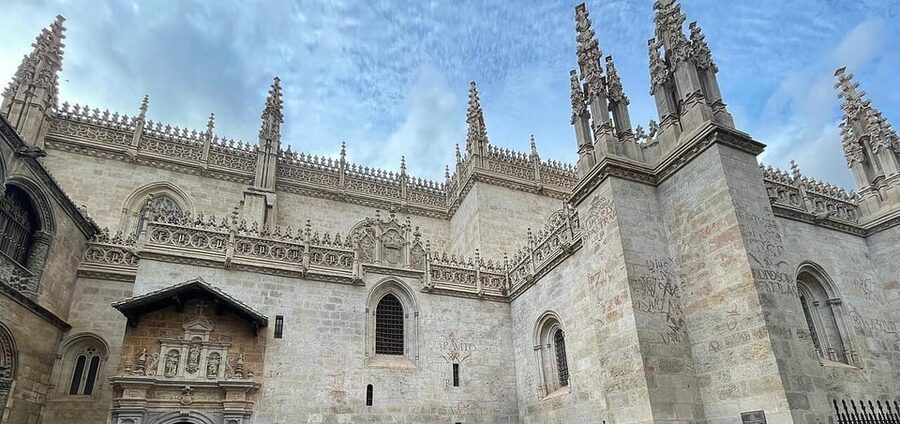
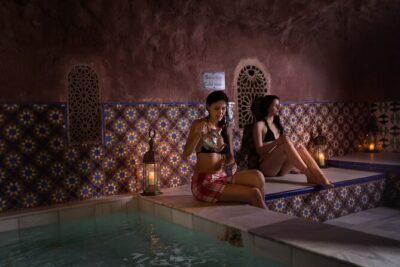
Ferdinand and Isabella chose to be buried here, and the Capilla Real still holds them behind a wrought-iron screen a few doors from the cathedral they paid for. Around it sit the Alcaicería silk lanes, the Corral del Carbón, and bath houses that never stopped running.
Granada is four walks and a hill.
The hill carries the Alhambra. Below it the Albaicín climbs in whitewash and cobbles. Sacromonte cuts into the ridge past it. The flat streets round the cathedral do the tombs, the silk lanes and the tapas.
Same hill, twelve different days.
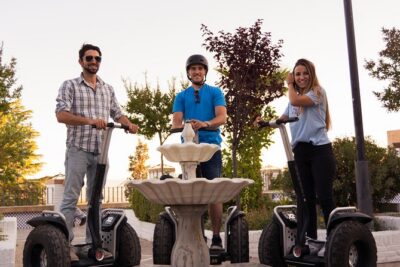
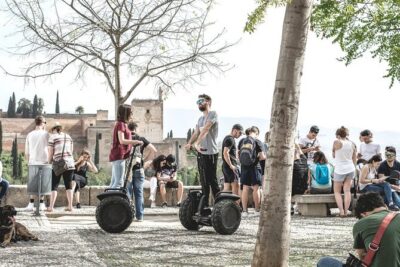
Twelve ways into the same city: an hour on foot, a morning behind a guide, an evening in a cave, a bath house to finish on.
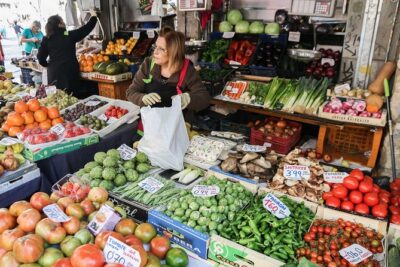
The snowline is forty minutes away.
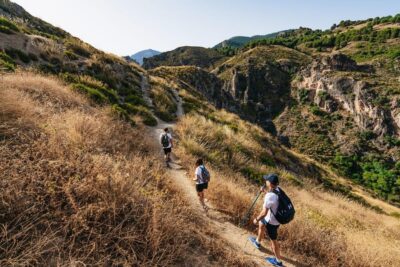
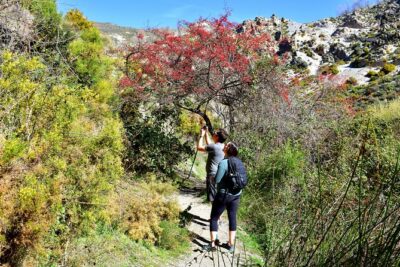
Granada sits at 700 metres with a 3,000-metre ridge behind it, so the trips out of town go up rather than along: safari tracks to the ski station, white villages strung across the Alpujarras, and a gorge full of hanging bridges at Monachil.
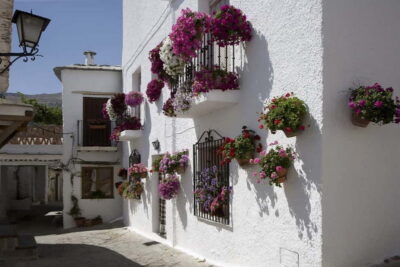
How the first three days should run.
Granada rewards a sequence. Clear the hill while your ticket is timed, spend the second day walking downhill through the old quarters, and give the third to the mountains standing behind them.
Day 1
The hill, first thing
Earliest Nasrid slot you could get, the Generalife straight after it, then down the Cuesta de los Chinos into the Darro valley for a late lunch. Everything else in Granada gets easier once this is done.
Plan day one →
 Day 2
Albaicín, then a cave
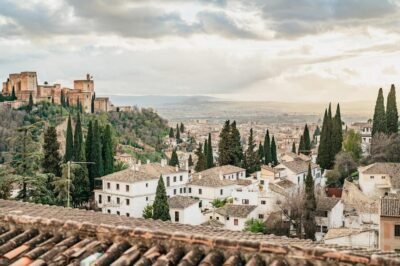
Carrera del Darro in the morning, teterias on Calderéria at noon, San Nicolás for the sunset, then up the ridge to Sacromonte for a zambra with the palace lit behind you.
Plan day two →
Day 2
Albaicín, then a cave
Carrera del Darro in the morning, teterias on Calderéria at noon, San Nicolás for the sunset, then up the ridge to Sacromonte for a zambra with the palace lit behind you.
Plan day two →
 Day 3
Up to the snow
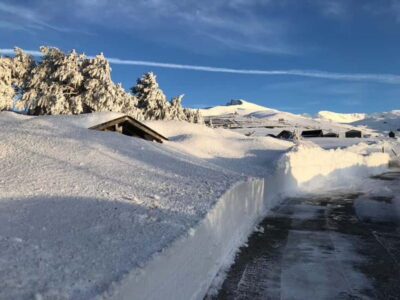
The road to Pradollano, the viewpoint at 2,500 metres, and Trevélez ham on the way home if you swing back through the Alpujarras. Check the pass before you commit in winter.
Plan day three →
Day 3
Up to the snow
The road to Pradollano, the viewpoint at 2,500 metres, and Trevélez ham on the way home if you swing back through the Alpujarras. Check the pass before you commit in winter.
Plan day three →
Fresh from the hill and the streets below it.
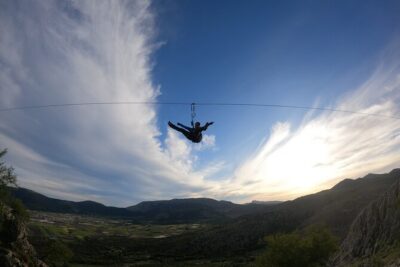 ★ 5.0Via Ferrata John Hogbin with PhotosFrom $884 reviews
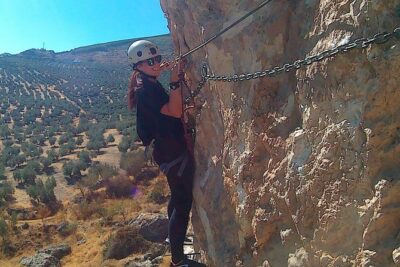 ★ 5.0Vía Ferrata in Granada – MoclínFrom $794 reviews
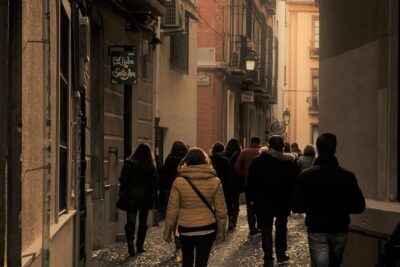 ★ 5.0Guided tour Granada UnexplainedFrom $335 reviews
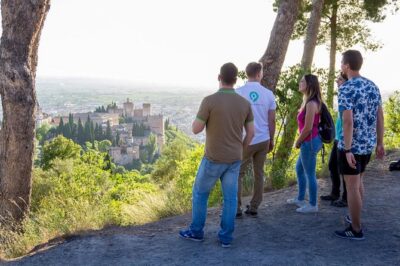 ★ 5.0Water paths. Private adventure and history tourFrom $1096 reviews
Complete Alhambra with tour guide – Avoid individual queuesFrom $1006 reviews
★ 5.0Water paths. Private adventure and history tourFrom $1096 reviews
Complete Alhambra with tour guide – Avoid individual queuesFrom $1006 reviews
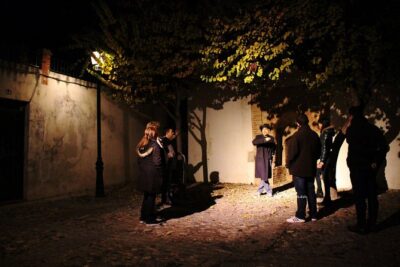 ★ 5.0Guided tour Conspiracy in the AlbaicínFrom $336 reviews
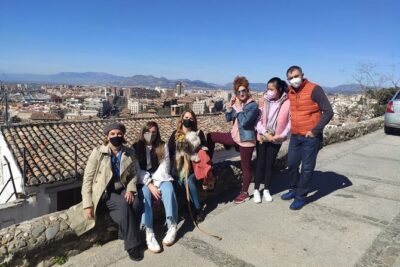 ★ 5.0Albaicin guided tour with dogsFrom $286 reviews